Back Teeth Hurt When Eating Beef
If you're concerned almost your personal contributions to climatic change, you lot may be looking for the most constructive climate-friendly choices you lot can make in your daily life. Flying less and living car-gratuitous are great options — but you lot can also make a big difference by changing up your nutrient choices.
Global greenhouse gas emissions (climate emissions) are apace warming the planet, causing more than extreme weather events and changing the ocean. These emissions primarily come from burning fossil fuels. Other sources include landfills, country clearing and agronomics.
Overall, around one third of all climate emissions are associated with the nutrient we eat. Nutrient production is a major driver of wild fauna loss, every bit forests are cleared to brand way for crops and livestock. Agricultural production is also water-intensive. In most parts of the world, over 70% of all freshwater is used for agricultural purposes.
The proficient news is that by adjusting food choices and eating habits, we can significantly minimize our ecology impact. So, how can you eat in a more climate-friendly way? And which food-related changes will have the greatest benefit for the environment? Here are a few tips to become started.
As a full general rule of thumb, animal-based foods produce about twice the emissions of plant-based ones. And a large percentage of overall climate emissions come up from red meat production. This is partly due to the carbon emissions from growing the grain to feed all those cows, and partly due to the marsh gas gas cows requite off.
So, information technology may come up as no surprise that the most meaning way to reduce personal emissions related to food is to swallow less meat and dairy. I study institute that past cutting meat and dairy, an individual could reduce their nutrient-related emissions past 73%.
And a more often than not plant-based diet is non merely good for the planet — it can also exist good for your health. For case, some of the longest-lived populations on earth by and large follow a 95% found-based lifestyle.
If you're non ready to switch to a totally vegan diet, try eating just i plant-based meal per 24-hour interval. Even a smaller daily alter tin make a big difference over fourth dimension.
2. Eat More Lentils and Beans
Beans and lentils are fantabulous plant-based sources of poly peptide, fiber and other key nutrients — and they create much lower climate emissions than fauna proteins. Lentils in particular have a very depression level of emissions, with a carbon footprint 43 times lower than beefiness. They as well need very little water to grow and don't demand any fertilizer, as they draw nitrogen from the air.
There are many different types of beans and lentils to choose from. And every bit an added bonus, these foods are usually very inexpensive — especially if you buy them dried. If you're just getting started cooking with these plant proteins, effort cerise lentils. They're one of the easiest and quickest types to melt, and they don't need any pre-soaking.
iii. Reduce Nutrient Waste
How we plan our meals and dispose of uneaten food is besides important, as around 8 to 10% of global climate emissions are linked to nutrient waste. Effectually one-third of all nutrient produced for people to eat ends up every bit waste product — and more half of that waste product happens in households.
Preventing food waste at home is simple, but it does crave some planning and training. Earlier going to the supermarket, try to plan your meals for the week in advance. It can also help to take a shopping list and buy only what you demand. Eating leftovers and sharing your extra food with others can also help to ensure that no food goes to waste material.
Composting can too aid. Composting any uneaten food avoids emissions from organic waste in landfills, and the nutrients from fruit and vegetable scraps can help nourish the soil.
4. Swallow Local and Seasonal Produce
Get-go, it's of import to note that eating less meat and more plants — no matter where those foods come up from — will most likely take a much bigger climate impact than switching to local foods. That's because a relatively small-scale portion of global food-related climate emissions come from transporting food.
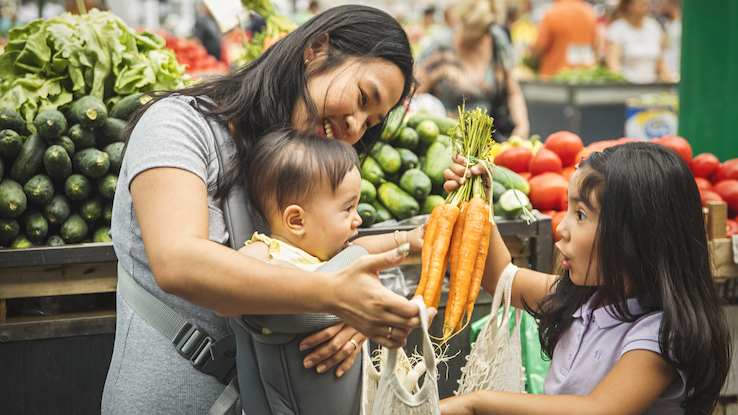
But that said, shopping at your local farmers market and choosing to buy locally grown, seasonal products can help to reduce food miles and pollution from long-distance send. And when yous buy fruit and vegetables in season, you as well avoid emissions from energy used to grow produce out of flavor, like lighting and heating for greenhouses.
Buying local also supports your local economic system, and can oft get you tastier, fresher fruits and veggies. So it's a win-win!
five. Look for Products Certified equally Sustainable
Products with an environmental certification are more probable to operate responsibly. Some mutual nutrient products and ingredients, like palm oil, take devastating impacts on the environment. All the same, there are certified sustainable palm oils that don't contribute to deforestation, crusade excessive emissions or impairment endangered wild animals. If you're in the U.Southward. or Canada, you can use this app to find sustainable palm oil products at the shop.
Equally, certifications on fish products (similar the Marine Stewardship Council or Seafood Lookout) demonstrate sustainable fishing techniques or farming methods that effect in lower climate emissions and avoid the depletion of fish stocks.
For more full general food production sustainability rankings and recommendations, you tin can try out the HowGood app (or the GIKI app if you lot're in the UK).
half dozen. Grow Your Food
Growing nutrient is a great way to lower climate emissions and reduce water utilise. And as a bonus, information technology doesn't involve whatever plastic packaging. There are also health and well-being benefits, as gardening involves both physical activity and the opportunity to eat more fresh fruits and vegetables.
If you don't have a garden or a balcony space, consider creating an indoor herb garden. Or y'all can check with your boondocks or city government to see if there's a community garden projection in your area. Customs gardens provide outdoor space to grow fresh fruit and vegetables, compost any nutrient scraps and share seasonal harvests.
We can all do something each day to minimize our impact on the environment. Hopefully, these tips will aid you consider the steps you can have towards climate-friendly food choices and eating more than sustainably.
Source: https://www.symptomfind.com/nutrition-supplements/climate-friendly-way-to-eat?utm_content=params%3Ao%3D740013%26ad%3DdirN%26qo%3DserpIndex
Belum ada Komentar untuk "Back Teeth Hurt When Eating Beef"
Posting Komentar